Cloak By Engeline Vonfoxridge  Name of piece and what layer it represents:
This is a cloak and it represents the outer layer
.Period and origin of time:
The period of origin I am using is the 1300’s my persona is of Austrian decent so I am using Austria as the place.
What material was used in period:
Wool as an outside layer, with linen lining.
Name of piece and what layer it represents:
This is a cloak and it represents the outer layer
.Period and origin of time:
The period of origin I am using is the 1300’s my persona is of Austrian decent so I am using Austria as the place.
What material was used in period:
Wool as an outside layer, with linen lining.
Material I used:
I material that I used was black wool, cotton string, and fake fur. How I assembled the pieces:
First thing I did was measure the length of wool that I wanted for my cloak. Then I made a neck band and pleated the cloak part into the top. Lastly I attached the fur to the edges. I hand sew the whole thing.
What I did and the difference between:
I used cotton string to sew the cloak together and fake fur for the trim.
How I assembled the pieces:
First thing I did was measure the length of wool that I wanted for my cloak. Then I made a neck band and pleated the cloak part into the top. Lastly I attached the fur to the edges. I hand sew the whole thing.
What I did and the difference between:
I used cotton string to sew the cloak together and fake fur for the trim. 
History:
An all-purpose outer layer of clothing has been in all cultures from the Neolithic to the 19th century. Cloaks are used for warmth as well as a makeshift bedding, making the cloak a staple garment for both sexes in all cultures and classes. What changes from time to time, and place to place are the fabrics, length and the methods of closing. Most cloaks were made with separate hoods. This arrangement provided two layers of wool over the neck, throat and shoulders during bad weather. The wearer could either wear the cloak alone or with the hood or if weather permits just the hood alone. “The English word cloak derives from the medieval Latin cloca, meaning cape, and the Old French cloke, which was the same as the later cloche, meaning bell. “  What I learned:
I learned that I hate working with fur it makes a mess on the wool.
References:
Fashion in the Age of the Black Prince. By Stella Mary Newton
What I learned:
I learned that I hate working with fur it makes a mess on the wool.
References:
Fashion in the Age of the Black Prince. By Stella Mary Newton
Boucher, François. 20,000 Years of Fashion. The History of Costume and Personal Adornment (Expanded Edition). (Harry N. Abrams, Inc., NY 1983). ISBN 0-8109-1693-2.
Cowgill, J.; M. de Neergard; and N. Griffiths. Knives and Scabbards (Medieval Finds from Excavations in London:1). (HMSO, London 1987)
Crowfoot, Elisabeth; Frances Pritchard, and Kay Staniland. Textiles and Clothing, c.1150-c.1450. (Medieval Finds from Excavations in London: 4) (alias "T&C") (London: HMSO, 1992).
Houston, Mary G. Medieval Costume in England and France, The 13th, 14th and 15th Centuries (Dover Publications, NY, 1996; 1st pub. Adam & Charles Black, London, 1939, as Vol. II of "A Technical History of Costume")
Kohler, Karl. A History of Costume. ISBN 0-4862-1030-8.
Cast Pewter Buttons
By Engeline Vonfoxridge source: Pilgrim Souvenirs and Secular Badges, by Brian Spenser, p. 308–310)
Name of piece and what layer it represents:
These are cast pewter buttons and they represent the accessory layer.
Period and origin of time:
The period of origin I am using is the 1300’s my persona is of Austrian decent so I am using Austria as the place.
What material was used in period:
Pewter was used in period
Material I used:
I used pewter.
Pilgrim Souvenirs and Secular Badges, by Brian Spenser, p. 308–310)
Name of piece and what layer it represents:
These are cast pewter buttons and they represent the accessory layer.
Period and origin of time:
The period of origin I am using is the 1300’s my persona is of Austrian decent so I am using Austria as the place.
What material was used in period:
Pewter was used in period
Material I used:
I used pewter.
 How I assembled the pieces:
First I carved the mold. Then I poured the pewter. Filed and cut off the flashing
What I did and the difference between:
I didn’t use a forge and I used a dremel to scoop out some of the mold.
Special thanks the Gilliana, Syeria, and the Arn Hold casting guild. They taught me how to cast helped fix some problems before they became mistakes.
History:
Buttons from the 9th century have been found in Sweden. Buttons in the early 12th century gained popularity. With the tighter fitting clothing of the 14th century became an item of fashion. Buttons were made of lead, pewter, bronze or tin. (Egan & Pritchard 2002, 272) In the 14th century buttons were worn as ornaments and fastenings from the elbow to the wrist and from the neckline to the waist. Buttons for the wealthy were made from gold, silver, and ivory. While the more common people wore buttons of bone or wood. Sumptuary laws and royal decrees dictated what kind of buttons the lower classed could wear. Buttons told society where you ranked in the social status.
How I assembled the pieces:
First I carved the mold. Then I poured the pewter. Filed and cut off the flashing
What I did and the difference between:
I didn’t use a forge and I used a dremel to scoop out some of the mold.
Special thanks the Gilliana, Syeria, and the Arn Hold casting guild. They taught me how to cast helped fix some problems before they became mistakes.
History:
Buttons from the 9th century have been found in Sweden. Buttons in the early 12th century gained popularity. With the tighter fitting clothing of the 14th century became an item of fashion. Buttons were made of lead, pewter, bronze or tin. (Egan & Pritchard 2002, 272) In the 14th century buttons were worn as ornaments and fastenings from the elbow to the wrist and from the neckline to the waist. Buttons for the wealthy were made from gold, silver, and ivory. While the more common people wore buttons of bone or wood. Sumptuary laws and royal decrees dictated what kind of buttons the lower classed could wear. Buttons told society where you ranked in the social status.
 What I learned:
I learned how to cast
References:
Egan, Geoff & Pritchard Frances (2002) Dress Accessories c. 1150-1450. Boydell Press, Woodbridge.
What I learned:
I learned how to cast
References:
Egan, Geoff & Pritchard Frances (2002) Dress Accessories c. 1150-1450. Boydell Press, Woodbridge.
Newton, Stella Mary (1980) Fashion in the Age of the Black Prince. A Study of
Piponnier, Francoise & Mane, Perrine (1997) Dress in the Middle Ages. Yale University Press. New Haven and London.
20,000 Years of Fashion - François Boucher
The Book of Costume - Millia Davenport
The History of Costume - Blanche Payne et al
Manuscript Painting at the Court of France - François Avril
The Rohan Master - Marcel Thomas
Treasures From the Bodleian Library - A. G. Hassal and Dr. W. O. Hassal
Les Tres Riches Heures du Duc de Berry - Jean Longnon and Raymond Cazellesthe years 1340-1365. Boydell Press, Woodbridge. Nockert, Margareta

Bag Hanger By Engeline VonFoxridge
Name of piece and what layer it represents:
This is a bag hanger and it represents the accessory layer.
Period and origin of time:
The period of origin I am using is the 1300’s my persona is of Austrian decent so I am using Austria as the place.
What material was used in period:
gold, silver, brass and pewter
By Engeline VonFoxridge
Name of piece and what layer it represents:
This is a bag hanger and it represents the accessory layer.
Period and origin of time:
The period of origin I am using is the 1300’s my persona is of Austrian decent so I am using Austria as the place.
What material was used in period:
gold, silver, brass and pewter
Material I used:
I used a coat hanger made from pot iron
How I assembled the pieces:
I bent the coat hanger in the shape that I wanted then cut the extra off. Then I smoothed the edges with a dremel.
What I did and the difference between:
I didn’t cast the metal I used what I had.

 History:
Belt or purse hangers were used to suspend purses, knives, keys, or other personal items from the belt. Belt hangers were also used as decorative items and too keep belts from being destroyed by the things hanging from the belt.
History:
Belt or purse hangers were used to suspend purses, knives, keys, or other personal items from the belt. Belt hangers were also used as decorative items and too keep belts from being destroyed by the things hanging from the belt.

What I learned:
I learned how to bend a coat hanger into a shape.
References:www.cottesimple.com/alms_purse/alms_purse_history.htmlThe effigy of Berengaria ROSALIE'S MEDIEVAL WOMAN
Baskets By Engeline VonFoxridge
Name of piece and what layer it represents:
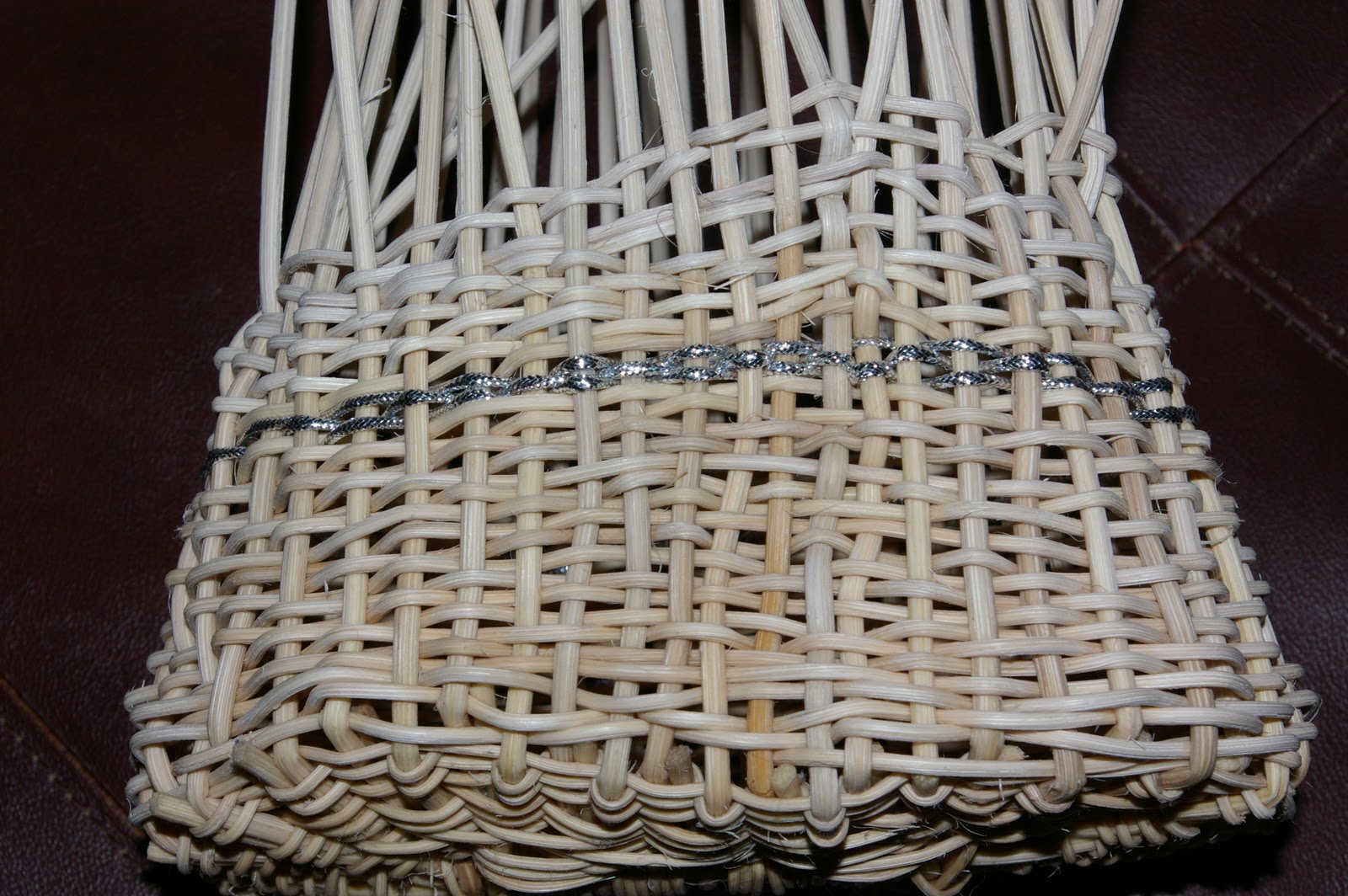
This piece is called a basket. It represents the additional embellishment.
Period of origin time period and origin:
The period of origin I am using is the 1300’s. My personia is of Austrian decent so I am using Austria as the place.
What material was used in period:
The material that was used in period were made of wood spilt narrow ribbons as well as vines and willow shoots.
Material I used: The materials that I used was reed that I bought from http://www.basketpatterns.com/mm5/merchant.mvc?Screen=CTGY&Store_Code=bp&Category_Code=reed.Ozark Medieval Castle Guide: Medieval Basket Making
How I assembled the pieces:
I got a large tub of water and soaked the reed that I was going to use in. The like Antinea taught me I started weaving it to form a basket.
What I did and the difference between:
I made my basket with two handles like a purse because my daughter wanted two handles. I couldn’t find any picture documentation that there were any in the 1300’s. I also made mine smaller then ones that seemed to be used once again because my daughter wanted that size.
 from The Tacuinum Sanitas
History:
People have always had the need to transport thing from. Basket weaving is one the widest spread crafts in history. It is hard to say really how old the craft is. Natural materials like wood, grass and animals remains decay. So baskets seldom survive. There are traces of baskets have been found in the Pyramids of Egypt and basket liner impressions have been found on the inside of ancient pottery. The oldest known baskets are between 10,000 and 12,000 earlier than established dates for pottery.
Lessons learned:
I learned how to make a basket. Things to do better next time; A flatter bottom and tighter weave.
References:
Linda Hebert
from The Tacuinum Sanitas
History:
People have always had the need to transport thing from. Basket weaving is one the widest spread crafts in history. It is hard to say really how old the craft is. Natural materials like wood, grass and animals remains decay. So baskets seldom survive. There are traces of baskets have been found in the Pyramids of Egypt and basket liner impressions have been found on the inside of ancient pottery. The oldest known baskets are between 10,000 and 12,000 earlier than established dates for pottery.
Lessons learned:
I learned how to make a basket. Things to do better next time; A flatter bottom and tighter weave.
References:
Linda Hebert
V. I. Reed & CaneThe Medieval Health Handbook: tacuinum sanitatis
Roesdahl and Wilson, 1992
(NY: George Braziller, 1976). .
medievaljames.blogspot.com/2011/03/medieval-basket-making.html


 By Engeline VonFoxridge